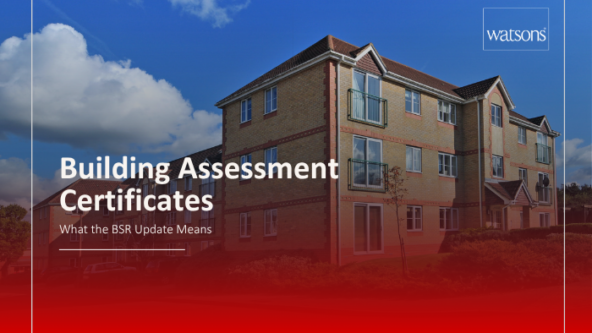


Following the Grenfell Tower Tragedy in 2017, there have been many initiatives and procedures implemented to improve building safety, in particular, the assessment of flats in multi-storey buildings.
The EWS1 form, or External Wall Fire Review form, is intended to provide a consistent and universally recognised record of what assessments have been carried out on the external wall construction of multi-story residential premises. This is where the highest floor is 18 metres or more above ground level or, where specific concerns exist. The form may only be completed by a designated competent person within strictly defined criteria as set out by the government.
The EWS1 is designed to provide a clear “safe” or “unsafe” certificate and so is pretty black and white in its operation. The outcome of the survey for each block will fall into one of the following:
- Option A: where the materials in the external wall would be unlikely to support combustion; or
- Option B: where combustible materials are present in the external wall, a more detailed assessment is undertaken.
The form is valid for five years, although a building must be reassessed if any renovation or adaption work takes place within that period, and applies to an entire block rather than each individual flat.
But this form should be set in the broader landscape of fire safety, which recent guidance from the government has advised should be viewed holistically in any multi-storey or multi-occupancy building irrespective of height. This has resulted in some confusion over which buildings the EWS1 form should apply to and whether that should only be to buildings over 18 metres in height or all multi-occupancy blocks.
I’m selling my flat, how does the EWS1 form affect me?
If your property is within a residential building where the highest floor is 18 metres or more above the ground, or if there are specific concerns about cladding on the building, you may be required to obtain a copy of any EWS1 form from your landlord or management company to provide to your purchaser.
I’m purchasing a flat, how does this affect me?
Your conveyancer should obtain a copy of the EWS1 for the block if you are looking to purchase a flat in a building meeting the criteria for assessment. This will allow you to consider not only the safety aspect, but also the financial implications if the block falls within Option B.
If you are purchasing your property with the assistance of a mortgage, your lender will also require confirmation that the entire external wall system complies with the latest government advice or may not provide a mortgage against the property.
I’m a landlord, how does this affect me?
There is no statutory obligation for a landlord to provide an EWS1 to leaseholders within their building. However, with some lenders refusing to proceed with mortgage applications where the form cannot be produced, it can mean tenants are unable to sell their leasehold interest and the value and insurance costs of the building may be affected where the fire-safety cannot be evidenced.
If the EWS1 assessment reveals that remedial works are required, there may be government funds to aid in undertaking the remediation works. Such assistance will be available where owners and their buildings meet the qualification criteria.
If you seek further information or have concerns, please contact our team of property specialists on 01603 226500 or email: management@watsons-property.co.uk