By David McMaster, Head of Lettings at Watsons Property

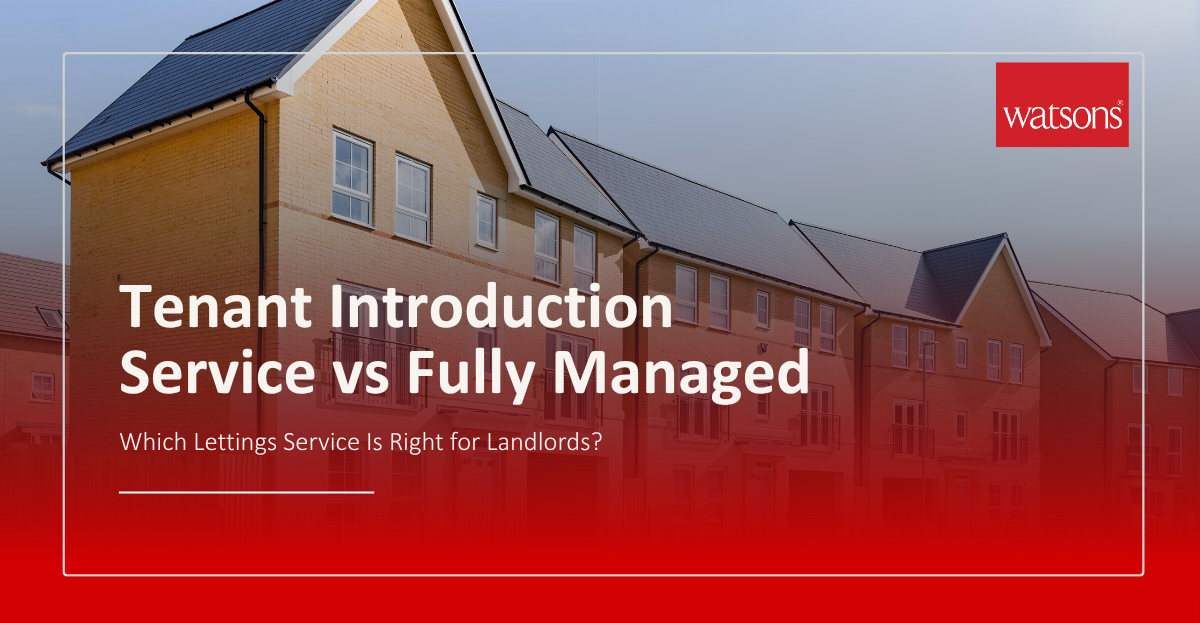
For many landlords, choosing a letting agent starts with a simple question: how much support do I actually need?
Some landlords want help marketing the property, finding a suitable tenant and setting up the tenancy. Others want ongoing support once the tenant has moved in, from rent monitoring and maintenance to inspections, communication and record keeping.
Both Tenant Introduction and Fully Managed lettings have a place. The right choice depends on the landlord, the property and how involved they want to be after the tenancy begins.
What is a Tenant Introduction Service?
A Tenant Introduction Service is usually designed for landlords who want professional support at the start of a tenancy, but are comfortable managing the property themselves afterwards.
The letting agent will typically help with the work needed to get the property let. This may include marketing the property, arranging viewings, identifying a suitable tenant, carrying out referencing, preparing tenancy paperwork and supporting the move-in process.
Once the tenant has moved in, the day-to-day management usually passes back to the landlord. That means the landlord will generally be responsible for ongoing tenant communication, rent monitoring, repairs, maintenance arrangements, inspections, record keeping and keeping track of relevant dates or documents.
For landlords with experience, time and confidence, this can work well. For others, the workload can be greater than expected, especially when issues arise during the tenancy.
What is a Fully Managed lettings service?
Fully Managed lettings provide ongoing support after the tenant has moved in.
The exact service can vary between agents, but Fully Managed property management will usually cover a wider range of day-to-day tenancy activity. This can include tenant communication, rent monitoring, maintenance coordination, inspections, landlord updates, tenancy administration and support with keeping key records organised.
A managing agent can also help landlords maintain a more structured approach. That does not remove the landlord’s own responsibilities, and landlords should still understand the obligations connected to their property and tenancy. However, it can provide a clear process for dealing with routine matters and responding when something needs attention.
For many landlords, the value of Fully Managed lettings is not only in finding a tenant. It is in what happens afterwards.
When Tenant Introduction may be suitable
Tenant Introduction may be a good fit for landlords who want support with the initial letting process but are comfortable taking over once the tenancy has started.
It may suit landlords who:
- have time to manage the property
- live close enough to deal with practical issues
- understand their responsibilities
- have reliable contractors
- are confident speaking directly with tenants
- are comfortable keeping records and monitoring key dates
- know how they would respond if rent is late, repairs are needed or a tenancy issue escalates
For some landlords, this level of involvement is entirely manageable. They may already have experience, a single property, good local contacts and the time to stay close to the tenancy.
The important point is to be realistic. Managing a rental property is not usually difficult every day, but when something does need attention, it often needs attention quickly.
When Fully Managed may make more sense
Fully Managed lettings may be more suitable for landlords who want a more structured level of support throughout the tenancy.
This may include landlords who have limited time, live away from the property, own more than one rental home or prefer not to deal directly with tenant queries, maintenance calls or administrative tasks.
It may also be relevant for portfolio landlords and professional landlords who need consistent processes across multiple properties, particularly around communication, maintenance, inspections, rent monitoring and record keeping.
Fully Managed support can also be useful for landlords who want support with:
- tenant communication
- rent monitoring
- maintenance coordination
- routine inspections
- landlord updates
- tenancy administration
- record keeping
- reminders around relevant safety and compliance documents
For portfolio landlords, the case for management can be even stronger. One property may be manageable alongside work and other responsibilities. Several properties can quickly create a much larger administrative burden.
Fully Managed support can also help where a landlord has inherited a property, relocated, become a landlord unexpectedly or simply reached a point where they no longer want to handle the day-to-day management themselves.
Landlords weighing up their options may also find it useful to understand what good property management includes once a tenancy is underway.
Why the decision matters more as landlord responsibilities increase
Landlords are operating in a private rented sector that continues to change.
Recent reforms, including the Renters’ Rights Act 2025, have placed further emphasis on clear records, communication and responsible tenancy management.
Requirements can vary depending on the property, tenancy and circumstances, and professional advice may be needed where landlords are unsure. However, the general direction is clear: landlords are expected to keep accurate records, understand their responsibilities and respond properly to tenancy issues.
The planned Private Rented Sector Database is one example of the growing emphasis on record keeping and property information.
That does not mean every landlord needs Fully Managed support. It does mean landlords should consider whether their current arrangement gives them enough structure.
For some, Tenant Introduction will remain the right option. For others, changing legislation, compliance expectations and day-to-day administration may make a managed service more practical.
Practical questions landlords should ask themselves
Before choosing between Tenant Introduction and Fully Managed lettings, landlords should ask:
- How much time can I realistically give to managing the property?
- Am I comfortable handling tenant queries?
- Do I have reliable contractors available when repairs are needed?
- Can I monitor rent and respond quickly if there is an issue?
- Are my compliance records easy to find and keep updated?
- Would I know what to do if a tenancy problem escalated?
- Do I live close enough to deal with practical matters?
- Is my current level of support still right for me?
These questions are useful because the decision is not only about cost. It is about time, confidence, risk, availability and the quality of the tenant experience.
Choosing the right level of support
The right lettings service should reflect how involved the landlord wants to be once the tenancy begins.
Tenant Introduction may be suitable where a landlord has the time, experience and contacts to manage the property themselves. Fully Managed lettings may be more appropriate where a landlord wants ongoing support with communication, maintenance, rent monitoring, inspections and administration.
The important point is to choose deliberately, rather than defaulting to the lowest level of support without considering what will happen after move-in.
How Watsons can help
Watsons works with landlords across lettings and property management, from identifying a suitable tenant to ongoing management support.
For some landlords, Tenant Introduction may provide the right level of help at the start of a tenancy. For others, Fully Managed property management may offer a more practical route, with ongoing support for communication, maintenance coordination, rent monitoring, inspections and tenancy administration.
If you are thinking about letting a property, or reviewing your current level of support, the Watsons lettings team can help you consider the right option for your circumstances.

Contact Us
For further information on the current property market and ongoing legislation changes, or to speak with one of our experts, please email the following:
- Lettings: letting@watsons-property.co.uk
- Valuation & Survey Team: survey@watsons-property.co.uk
- Property Management:management@watsons-property.co.uk
Or call us on 0333 220 1234